Related Posts

General News Blog
My WordPress Blog
My WordPress Blog
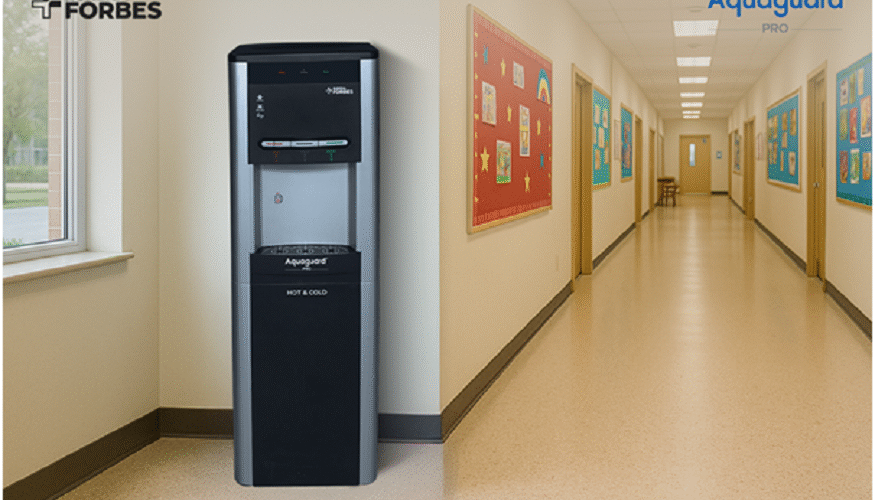
Reliable access to clean, chilled drinking water is a core requirement in any commercial and public space. From offices and schools to hospitals and industrial facilities, a drinking water cooler supports daily hydration while helping maintain hygiene and comfort.
With evolving safety standards and varied usage demands, modern water coolers now combine cooling, purification, and durability in one system. Understanding their applications, key features, and capacity options helps organisations choose a solution that meets both operational needs and long-term efficiency.
Drinking water coolers are widely used across commercial and institutional settings.
In many such environments, water quality may vary, making it important to combine cooling with purification. This is why water coolers with in-built purifiers are increasingly preferred over basic cooling units.
Modern drinking water coolers are designed to do more than dispense cold water. Important features to consider include:
For organisations comparing solutions, it is also useful to understand how cooling systems compare with larger purification setups, such as when evaluating overall infrastructure costs alongside factors like prices for centralised water treatment.
Capacity is one of the most important factors when selecting a drinking water cooler. Smaller workplaces or clinics may require systems in the 15–30 litres per hour (LPH) range, which comfortably serve limited daily usage. Mid-sized offices, schools, and commercial kitchens often benefit from 40–80 LPH models that handle regular footfall without strain.
High-demand environments such as factories, large offices, and public institutions typically require 100–120 LPH capacity. These systems are built for continuous usage, ensuring instant availability of chilled, purified water even during busy hours. Choosing the right capacity helps avoid long queues, overworked machines, and inconsistent cooling.
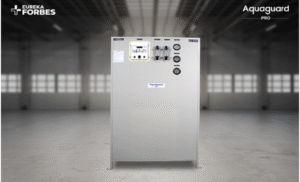
Aquaguard offers advanced drinking water cooler solutions designed for commercial reliability and safety.
Selecting the right drinking water cooler means matching application needs, capacity requirements, and essential features. Whether it’s a small office or a large commercial facility, the right system ensures safe hydration, operational efficiency, and long-term reliability, making it a vital part of any modern water infrastructure.
For organisations that require higher purification capacity or do not need chilled water at every point, RO plants and other commercial water purifiers can also be considered as part of the overall water management strategy.
In such cases, the RO plant price depends on factors like output capacity, purification stages, automation level, and source water quality. While drinking water coolers focus on safe, chilled dispensing at the point of use, commercial RO systems are designed for continuous, large-volume purification, making them better suited for factories, institutions, and high-demand facilities.