Related Posts

General News Blog
My WordPress Blog
My WordPress Blog
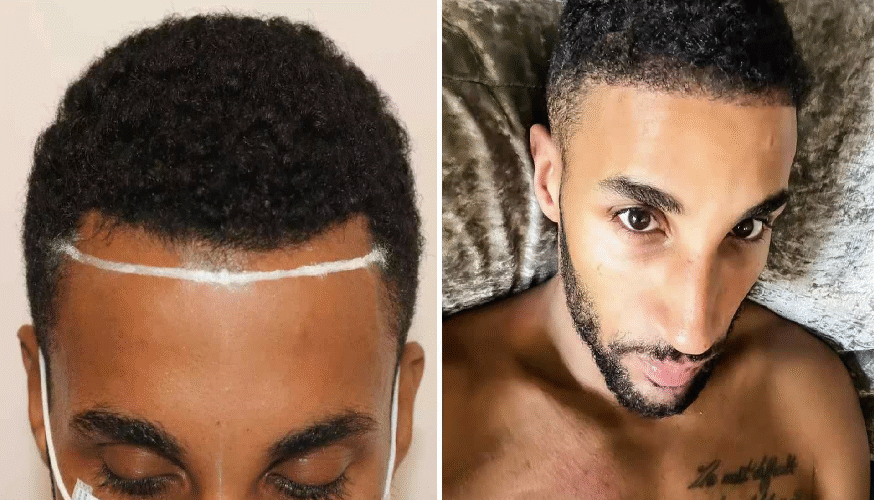
Donor area management is one of the most critical factors determining the success of any hair transplant procedure. While general donor management principles apply to all hair types, Afro-textured hair requires a fundamentally different approach due to its unique follicle anatomy, curl pattern, scalp characteristics, and visual density behavior. Mismanaging the donor area in Afro hair transplants can lead to permanent aesthetic issues, including visible thinning, patchiness, or scarring that is difficult to conceal.
Understanding how donor area management differs for Afro hair is essential for both surgeons and patients, as these differences directly influence graft survival, long-term scalp appearance, and the possibility of future procedures. Clinics with specialized experience in Afro-textured hair, such as Turkey Hair Center, emphasize tailored donor management strategies to support sustainable and natural results.
The donor area is typically located at the back and sides of the scalp, where hair follicles are genetically resistant to hair loss. In Afro-textured hair, this region may appear visually dense due to tight curls and thicker hair shafts, but visual density does not always reflect actual graft availability.
Key Characteristics of Afro Hair Donor Areas
These characteristics make donor assessment more complex compared to straight or wavy hair.
One of the most defining features of Afro hair is the curved follicle structure beneath the scalp. While the hair may appear tightly coiled above the skin, the follicle itself often follows a pronounced curved or “C-shaped” path below the surface.
Why This Matters
Unlike straight hair, where follicles follow a relatively predictable direction, Afro hair follicles vary significantly from one graft to another, even within the same donor zone.
A common misconception in Afro hair transplants is assuming that dense-looking hair equals high donor capacity. In reality, Afro hair often provides strong visual coverage with fewer follicles due to its curl pattern.
Implications for Donor Planning
Surgeons must rely on microscopic density analysis, not visual inspection alone, when evaluating Afro hair donor areas.
Extraction distribution is one of the most important differences in donor area management for Afro hair.
Key Principles
Because Afro hair clumps naturally into curl groups, uneven extraction can disrupt these patterns, making thinning more noticeable.
Best Practices
Scarring behaves differently in Afro-textured hair and darker skin types.
Potential Challenges
Proper donor management must consider not only graft yield but also skin healing behavior.
| Factor | Afro Hair | Straight Hair |
| Follicle Shape | Curved / Spiral | Mostly straight |
| Visual Density | High | Moderate |
| True Graft Density | Variable | More predictable |
| Transection Risk | Higher | Lower |
| Safe Extraction Rate | More conservative | Higher |
| Donor Camouflage | Curl-dependent | Hair length-dependent |
Punch size and tool selection play a crucial role in donor area preservation for Afro-textured hair. Because Afro hair follicles curve beneath the scalp, surgeons must carefully match punch diameter to follicle anatomy. Smaller punches reduce visible scarring but increase transection risk, while larger punches may better protect follicles but require precise handling to maintain donor aesthetics.
Considerations
Many surgeons adapt punch size dynamically during the procedure rather than using a single standardized tool.
Donor area management differs significantly between men and women with Afro-textured hair. Men typically have larger donor zones and can tolerate higher graft extraction, while women often have narrower donor areas and greater sensitivity to visible thinning. As a result, donor planning for women must be more conservative, focusing on even extraction and long-term preservation to maintain natural scalp appearance.
Men
Women
Women with Afro-textured hair require especially conservative donor management to avoid long-term cosmetic issues.
Managing the donor area during large graft sessions requires a highly conservative and strategic approach, especially for Afro-textured hair. Surgeons must distribute extractions evenly, limit graft density per zone, and preserve natural coverage to prevent overharvesting. Proper planning helps maintain donor integrity while supporting safe graft yield and long-term aesthetic stability.
Key Risks
Mitigation Strategies
Long-term donor preservation is one of the most important yet often underestimated aspects of successful hair transplantation, particularly in procedures involving Afro-textured hair. While immediate graft survival and short-term aesthetic results are critical, the true measure of a well-executed hair transplant lies in how effectively the donor area is preserved over time. Poor donor management may not be immediately visible after surgery, but its consequences can become increasingly apparent months or even years later.
A long-term donor preservation approach focuses on maintaining balanced density, protecting follicle integrity, and ensuring that the donor area continues to appear natural under different hair lengths and styling choices. By prioritizing sustainability over aggressive graft extraction, surgeons can safeguard both current outcomes and long-term scalp aesthetics.
Overharvesting during the first procedure can permanently limit future treatment options.
These mistakes are often irreversible.
Post-operative donor care is essential for optimal healing.
Key Aftercare Practices
Donor area recovery should be monitored for several months, not just weeks.
Donor area management for Afro hair is not simply a variation of standard practice—it is a distinct surgical discipline. Experience, adaptability, and deep anatomical understanding are essential to avoid permanent donor damage.
When donor management is handled correctly, Afro hair transplants can achieve excellent outcomes with minimal donor visibility and strong long-term sustainability.
Donor area management is especially important for Afro hair because of curved follicles, visual density differences, and higher sensitivity during extraction. A careful and customized approach helps protect the donor area and supports natural, long-term results, which is why experienced clinics such as Turkey Hair Center place strong emphasis on individualized donor planning for Afro-textured hair.
To explore this topic in more detail and understand the techniques involved, learn more about donor area preservation in Afro hair transplantation.